
Carrying your own water means you can drink when you need to, not when a fountain or stream happens to be nearby. On a trail run, that small bit of control keeps you from guessing about your next sip. Most runners who carry their own supply simply feel more relaxed about the miles ahead.
Water sources on trails can be far apart, dry in late summer, or simply not where the map says they are. If you rely on finding water along the way, a dry creek bed can turn an easy outing into a long walk back. Packing your own supply lets you plan your route around the distance you can cover, not around the next source.
Carrying water also means you can choose when and how much to drink. Some runners like to sip little and often, while others prefer a bigger drink at each aid point. Having your own bottle or bladder within reach makes either style easy to follow.
Heat is a real hazard on trails, and running hard in hot weather makes it worse. Plan to carry more water on hot days, start your run with a full supply, and shade your head and neck when you can. If you notice dizziness, confusion, or stopping sweat while you feel very hot, stop, get into the shade, and get help if you need it.
Choosing the Right Bottle or Bladder for Your Run
Handhelds, soft flasks, hydration vests, and belt bottles all carry water, but they feel very different once you are a few miles in. Start by thinking about how long your usual run lasts and how often you want to drink.
For short runs under an hour, a simple handheld bottle is often enough. You grip it, sip when you want, and set it down. Many runners like handhelds for hot, dry trails because they can see exactly how much is left. Look for a bottle with a wide mouth if you plan to add ice or electrolyte powder, since narrow openings are harder to fill and clean.
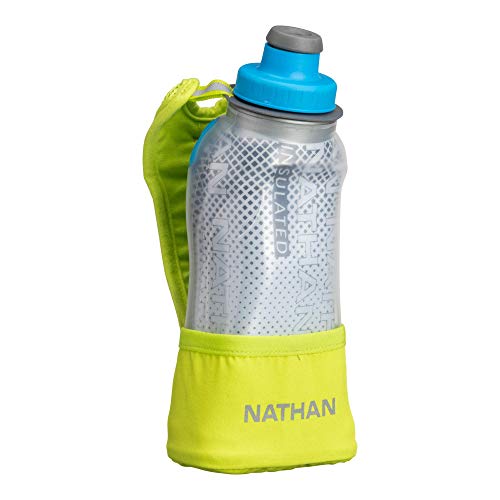
NATHAN Handheld Water Bottle with Adjustable No-Grip Strap
A 12 oz insulated handheld bottle with an adjustable strap that lets you run without gripping it.
Product information
Our review: 4.2 out of 5
Product links
For longer outings, a hydration vest or pack with a bladder makes more sense. A bladder sits in the pack and sends water through a tube that clips near your shoulder, so your hands stay free. Check that the bladder fits the pocket in your pack before you buy, and check the maker's manual for the capacity range the pack supports. Pack straps that sit well on your chest and back keep the load steady, which matters more than most people expect on rocky descents.
A few things to check before you choose:
- How the tube or cap closes, and whether it leaks if the bottle tips in your pack
- Whether you can refill it one-handed while moving or need to stop
- How easy the bladder is to dry and clean, since damp corners grow mildew fast
- Whether the pocket or belt has space for a phone, keys, or a snack
Fit matters as much as capacity. A belt or vest that bounces or chafes will stop you from drinking, even if the water inside is perfect. Try your gear on with a loaded bottle and jog a few steps before a long run. If it rubs or slides, adjust the straps or try a different style before you head out.
Keeping Water Cold and Easy to Reach
Cold water goes down easier on a hot run, and a lot of runners say they simply drink more when it is cold. The trick is keeping it that way for hours, not just for the first mile. An insulated bottle helps here. The HydraPak Polar Sport Insulated Water Bottle Contender Black is one option if you want a bottle built to hold its chill, and it is the kind of bottle that works well for keeping a drink cool on a warm outing.

HydraPak Polar Sport Insulated Water Bottle Contender Black
A 20oz insulated squeeze bottle with a self-sealing cap, built to keep your drink cool on the move.
Product information
Our review: 4.2 out of 5
Product links
Here are a few easy ways to keep your water cold without adding much weight:
- Fill your bottle or bladder with cold water the night before, or use water straight from a cooler at home.
- Keep the bottle in shade when you stop, and avoid leaving it on hot rock or dark dashboard-style surfaces.
- Add a few ice cubes at the start if your bottle has a wide mouth. Wide openings are much easier to fill with ice and to clean afterward.
- Stash a spare, unfrozen bottle in a cool spot in your car so you have a fresh one ready after a long run.
Reach matters just as much as temperature. If you have to dig through a pack every time you are thirsty, you will sip less than you should. Think about where your water lives on your body or pack before you head out. Handhelds sit in your hand, belt bottles ride at your hip, and bladder tubes clip near your shoulder. Pick the spot that lets you drink without breaking stride or slowing down on a climb.
Test your setup on a short walk first. Reach back, grab the bottle, take a sip, and put it back without looking. If you have to stop, the setup needs work. Try a different pocket, shift the strap, or move the bottle to the side that feels natural for you. A few minutes of adjusting at home saves a lot of frustration on the trail.
Be careful with ice on hot days. Keep ice in a sealed container or bottle, and do not let anyone in your group chew on it while running, since a sudden slip or a bite on a cold cube can cause a dental injury. Also, never put a bottle or water source in direct flame or on a camp stove to heat it, because that can cause burns and bottles can rupture or melt. Keep anything that is cold or hot away from open fire and ask yourself whether the container is rated for that use before you try.
Quick Tips for Staying Hydrated on Longer Runs
Your run is probably going to last longer than you think, so plan for a little more water than you expect to need. A good rule of thumb is to pack enough for the whole route plus a spare sip or two for a delay, a detour, or a slower climb. Write down your planned distance and the time you expect to be out, then check that your carrying setup covers it.
Plan your drinking breaks before you hit the trail. Pick two or three spots on your route, like a shady switchback, the top of a climb, or a flat stretch, and take a few sips at each one. Waiting until you feel thirsty often means you have already fallen behind, so a set routine keeps you ahead of it.
Pay attention to salt on longer runs. If you are sweating a lot, plain water alone may not be enough for you. Many runners add an electrolyte powder or tablet to their bottle on hot, long outings. Read the label on whatever you choose and follow the mixing directions exactly. Too much powder in a small bottle can taste harsh and make you want to drink less, which defeats the point.
Keep an eye on your bottle as you go. Glance at how much is left every hour or so, and do the math. If you are running low and still have a long way to go, slow down, walk the hills, and cut back on how far you push. Turning around early or taking a shorter loop is a smart move, not a failure.
Finally, take a few small, easy steps at the trailhead. Top off your water, tuck your phone and car keys where they will not bounce out, and tell someone where you are headed and when you expect to be back. A little prep at the start means you can focus on the miles, not on how much water you have left.

